(Déjà Vus of Dissent)
“There has probably never been a time in the history of the world when evil speakers and deceivers have had such an instantaneous, global platform—not only to spread latter-day distortions, but to resurrect ones from the past and spread them anew” (DV2-January 16, 2016).
On the other hand, the same applies to truth speaking though it seems the “natural man”
1 pursues and generates more of the former, as noted in
Part One. Evil Speaking? Discernment?2
But what is evil speaking? To some, it means to say anything critical or negative about another, particularly about church officials—even if the criticism is true.
3 But if we run this concept through history and scripture, we would find:
| Elijah | Isaiah |
| Jeremiah | Ezekiel |
| Amos | Hosea |
| Malachi | Lehi |
| Abinadi | Samuel the Lamanite |
| John the Baptist | Jesus the Christ |
| Simon Peter | John the Beloved |
| Stephen the Martyr | Paul |
| John Huss | John Wycliffe |
| Martin Luther | Huldrych Zwingli |
| Henry Barrow | John Smyth |
| Thomas Helwys | Roger Williams |
| Joseph Smith | et al., al., al. |
—every one of them offending this broad definition of evil speaking. Each was viewed as a “rogue upstart”—an evil speaker in the eyes of established authorities. Such “rogues” have arisen déjà vu upon déjà vu to warn God’s people and religious leaders that they had become lost in Babylon—in her enticing ways and her fondness for “smooth things.”
4 Thus, for the above dissenters, it was as if each had received this commission:
 |
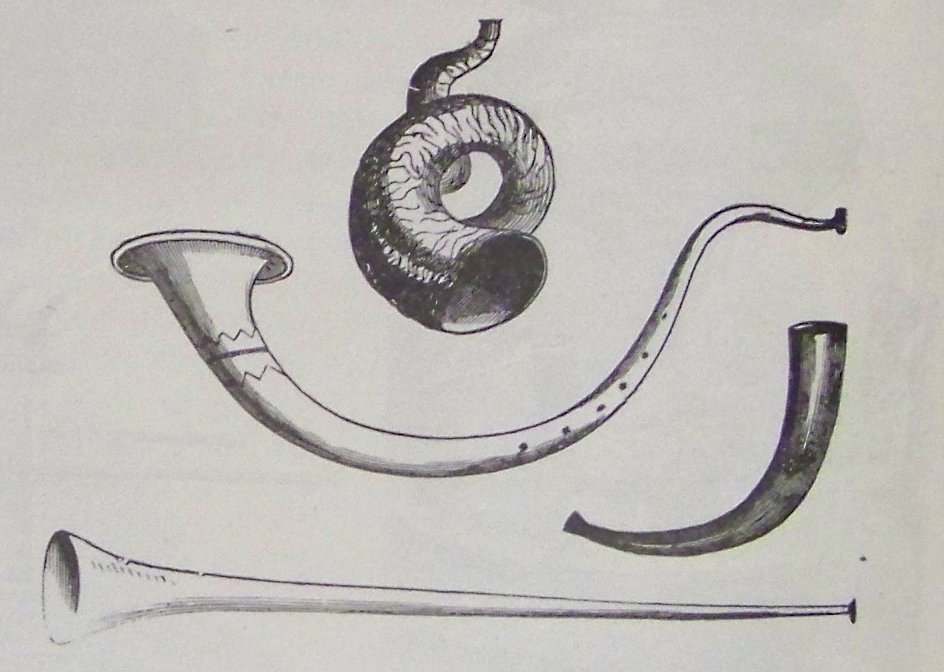
~ various calls; various voices ~
(Source at footnote 24) |
CRY aloud, spare not, lift up thy voice like a trumpet, and shew my people their transgression, and the house of Jacob their sins. (Old Testament | Isaiah 58:1)
In hindsight, we hold most of these historical reformers in honor for raising voices of criticism and warning. But in their day they were not held in honor. When we consider the persecutions they suffered—even unto martyrdom—it is clear that their voices of conscience were anathema to those they criticized. They were seen as apostates worthy of death if they refused to reform and conform, even if it meant going against their conscience.
So the dilemma is to know what the Lord means when He denounces “evil speaking.” Let us consider the context and companion words:
Let all bitterness, and wrath, and anger, and clamour, and evil speaking, be put away from you, with all malice: And be ye kind one to another, tenderhearted, forgiving one another, even as God for Christ's sake hath forgiven you (New Testament | Ephesians 4:31-32).
The teacher's duty is to watch over the church always, and be with and strengthen them; And see that there is no iniquity in the church, neither hardness with each other, neither lying, backbiting, nor evil speaking; (Doctrine and Covenants | Section 20:53-54).
The context seems to be where one is speaking in malice, bitterness, deception, etc. But is there a broader meaning uniquely applicable to our latter-day?
The LDS are familiar with the expression “evil speaking of the Lord’s anointed” yet everyone of the officials criticized by the above dissenters also considered themselves to be the “Lord’s anointed.”
So how do we resolve this? How do seekers of God’s will and ways discern what to do:
▪ when instruction or policy disturb conscience?
▪ when teaching or practice seem contrary to canonized scripture?
▪ when “tradition” seems to trump truth-seeking and truth-speaking?
▪ when the Spirit witnesses that all is not well?5
▪ when believers / followers become hostile with questioners?
Perhaps the counsel of Paul the Apostle is the preeminent test for everyone: believers, questioners, and unbelievers.
Prove all things; hold fast that which is good.
(New Testament | 1 Thessalonians 5:21)
And what does “prove” mean if not to investigate, test, study, search, seek—being open to God’s witness through revelation? And what does “all things” mean if not everything?
And when God says: “Doubt not, but be believing”
6 does He mean, in part,
“Doubt not [that you will get My answer to all your questions], but be believing [in My wisdom—prepared to do My will in My timing
7]”?
And could His answers range along a continuum?—from “Do nothing. Say nothing. I am working on the situation” to “This is what I want you to say and do—in this place and with this timing.”
So why does God seem to have inspired “dissenters” down through the ages? Here are some observations and advice from yesteryear.
8
[Joseph Smith] To become a joint heir of the heirship of the Son, one must put away all his false traditions.9
President Joseph Smith read the 14th chapter of Ezekiel—said the Lord had declared by the Prophet, that the people should each one stand for himself, and depend on no man or men in that state of corruption of the [house of Israel]— that righteous persons could only deliver their own souls—applied it to the present state of the Church of Jesus Christ of Latter-day Saints—said if the people departed from the Lord, they must fall—that they were depending on the Prophet, hence were darkened in their minds, in consequence of neglecting the duties devolving upon themselves, envious towards the innocent, while they afflict the virtuous with their shafts of envy.10
[Joseph Smith] It always has been when a man was sent of God with the priesthood and he began to preach the fullness of the gospel, that he was thrust out by his friends, who are already to butcher him if he teach things which they imagine to be wrong; and Jesus was crucified upon this principle.11
[Brigham Young] Some may say, Brethren, you who lead the Church, we have all confidence in you, we are not in the least afraid but what everything will go right under your superintendence; all the business matters will be transacted right; and if brother Brigham is satisfied with it, I am. I do not wish any Latter-day Saint in this world, nor in heaven, to be satisfied with anything I do, unless the Spirit of the Lord Jesus Christ, the spirit of revelation, makes them satisfied. I wish them to know for themselves and understand for themselves, for this would strengthen the faith that is within them. Suppose that the people were heedless, that they manifested no concern with regard to the things of the kingdom of God, but threw the whole burden upon the leaders of the people, saying, If the brethren who take charge of matters are satisfied, we are, this is not pleasing in the sight of the Lord. ¶ Every man and woman in this kingdom ought to be satisfied with what we do, but they never should be satisfied without asking the Father, in the name of Jesus Christ, whether what we do is right.12
[George Q. Cannon] Do not brethren, put your trust in man though he be a bishop, an apostle, or a president. If you do, they will fail you at some time or place; they will do wrong or seem to, and your support is gone; but if we lean on God, He never will fail us. When men and women depend on God alone, and trust in Him alone, their faith will not be shaken if the highest in the Church should step aside. Perhaps it is His own design that faults and weaknesses should appear in high places in order that His Saints may learn to trust in Him, and not in any man or men.13
[Samuel Richards] "We have heard men who hold the priesthood remark, that they would do anything that they were told to do by those who preside over them, if they knew it was wrong: but such obedience is worse than folly to us; it is slavery in the extreme; and the man who would thus willingly degrade himself, should not claim rank among intelligent beings, until he turns from his folly. A man of God...would despise the idea. Others in the extreme exercise of their almighty authority have taught that such obedience was necessary, and that no matter what the saints were told to do by their presidents, they should do it without asking any questions. When Elders of Israel will so far indulge in these extreme notions of obedience as to teach them to the people, it is generally because they have it in their minds to do wrong themselves."14
[George Teasdale] I understand that all men and women are their own agents; and I do not know a worse degree of slavery than to be afraid to think for yourself and speak what you believe.15
[J. Golden Kimball] Latter-day Saints, you must think for yourselves. No man or woman can remain in this Church on borrowed light.16
[George Q. Cannon] It is the design of the Lord to develop within every man and woman the principle of knowledge, that all may know for themselves. He has poured out His holy spirit upon all of us, and not upon President Young nor upon bro. Joseph alone. The Lord designs that the principle of knowledge shall be developed in every heart, that all may stand before Him in the dignity of their manhood, doing understandingly what He requires of them, not depending upon nor being blindly led by their priests or leaders, as is the universal custom, and one of the most fruitful sources of evil to the people on the face of the earth. God intends to break down this order of things, and to develop in the bosom of every human being who will be obedient to the gospel and the principles of truth and righteousness, that knowledge which will enable them to perform understandingly all the labors and duties he requires of them. ¶ If we, in our experience, have not yet proved the truth of the words of the prophet—"Cursed is he that trusteth in man, or maketh flesh his arm"—probably we will do if we live long enough. There is a curse attending every man and woman who does this. If we will watch the operations of the gospel of Jesus Christ among us, we will see that it has a tendency to develop knowledge in the bosoms of all, and it is the design of Providence that it should be so. We must all learn to depend upon God and upon Him alone. Why, the very man upon whom we think we can rely with unbounded confidence, and trust with all we possess, may disappoint us sometimes, but trust in God and He never fails. We can go before Him at all times, and upon all occasions, and pour out our souls and desires before Him, and we feel that we lean upon a rock that will not fail, and upon a friend that will not desert us in the day of trial. He is omnipotent, and in Him only can we trust under all circumstances, therefore we perceive why the prophet has said—"Cursed is he that trusteth in man, or maketh flesh his arm." ¶ God, our Heavenly Father, designs that all who will observe truth and righteousness should possess wisdom and understanding for themselves, and He is bringing us through circumstances that will develop within us that portion of the Godhead or Deity which we have received from Him, that we may become worthy of our high and glorious parentage. This being His design respecting us, we should seek by every means in our power to aid Him in carrying it out, until the whole people are enlightened by His Spirit, and act understandingly and in concert in carrying out His designs. In other systems the design is to keep the people down in ignorance and darkness respecting the principles that are taught them, to keep the knowledge in the hands of a select few, upon whom the people are forced to depend, but this is not the genius of the kingdom of God. The spirit of the church of God is that manifested by Moses when, in answer to Joshua, who wished him to reprove some who were prophesying, he said—"No; but I would to God that all were prophets." That is the spirit of the gospel of Jesus Christ. The genius of the kingdom with which we are associated is to disseminate knowledge through all the ranks of the people, and to make every man a prophet and every woman a prophetess, that they may understand the plans and purposes of God. For this purpose the gospel has been sent to us, and the humblest may obtain its spirit and testimony, and the weakest of the weak may obtain a knowledge respecting the purposes of God. This is the difference between the church and kingdom of God and the creeds and institutions of men. The idea that prevails in the world concerning us is that we are hoodwinked and led blindly by our leaders; but the contrary to this is the case, for it is the wish of every man who comprehends this work that the people should all understand it. The bishops and teachers, if they have the right spirit, wish their wards to understand the principles of the gospel and the requirements of heaven as they understand them, and so it is through all grades of the priesthood and through all the ramifications of the church of God. If we take this course continually we will become a great and mighty people before the Lord. If we do anything let us do it understandingly. If we hear any principle taught from the stand that we do not understand let us seek to comprehend it by the Spirit of God. If it be not of God we have the privilege of knowing it. We are not required to receive for doctrine everything that we hear. We may say—"I do not know whether this is true or not, I will not fight it, neither will I endorse it, but I will seek knowledge from God, for that is my privilege, and I will never rest satisfied until I have obtained the light I require." If you hear a doctrine that does not agree with your feelings, or that you do not believe, take this course; do not reject nor endorse hastily, without knowing or understanding. By taking this course you will develop the principle that God designs we should possess, and we will thus become a wise and understanding people, for we will be based on the Rock of Revelation.17
[Charles W. Penrose] Our testimony does not depend upon Joseph Smith; it does not depend upon Brigham Young; it does not depend upon John Taylor, or upon the council of the Twelve Apostles, which is now the presiding quorum in the Church. I pin my faith to no man's sleeve; I am a believer in the Scripture which says, "Cursed be the man that trusteth in man, and maketh flesh his arm." I obeyed this Gospel because I believed it was true, through reading the Scriptures, which I was taught from my early childhood to believe in. When the sound of the Gospel reached my ears I believed; and having bowed in obedience to the ordinances, I received a testimony for myself of its truthfulness, and that testimony has never departed from me.18
[Hugh B. Brown] Faith is the ground of all religion, but there is no special virtue in blind faith. Only faith that is grounded in a courageous search for truth is worthy of the student. We should reject every temptation to irrationality, overcome every inclination to disregard or distort the facts, avoid the extremes of fanaticism, and above all else, demand the truth. Here is the firm foundation for our religion—a religion that describes the glory of God as intelligence and proclaims that man is saved no faster than he gains knowledge. ¶ Just as the truths of science must be tested and verified by reason and factual investigation, so the moral and spiritual truths which the world is seeking from its prophets must be proved and validated in the experience of men. In his search for truth, every man must be true to himself. He must answer to his own reason and to his own moral conscience. Anything less than this would betray his dignity as a human being and a child of God. True dignity is never won by place, and it is never lost when honors are withdrawn.19
Are leaders fallible? History, scripture—even most leaders—agree, “Yes.” And in further witness: If it were not possible for leadership to err, why would the Lord have made provision in Doctrine and Covenants 107 that “inasmuch as a President of the High Priesthood shall transgress, he shall be had in remembrance before the common council of the church” and that “none shall be exempted from the justice and the laws of God.”
20
In short, truth speaking prompted by the Holy Ghost is not evil speaking. Our dilemma as laity and leaders is to get things right—to listen, to hear, and to speak or not speak as God wills; BUT what more efficient, effective way could God have to teach His children the way of discernment
21 and the necessity of trusting in Him than to place fallible mortals in positions of leadership? As the Apostle Paul said, “Prove all things,” or as Roger Williams phrased it:
The Father of Spirits mercifully persuaded [me] to
Swallow down no longer without Chewing;
To chew no longer without Tasting;
To Taste no longer without
Begging the Holy Spirit of God to
Enlighten and Enliven [me].”22
-------------------------------------/
Note 1: Too often, what could be called evil speaking about leaders of today centers on the personal instead of on fundamentals and makes use of disparaging, abusive language that does not foster discussion or persuasive dialogue.
Note 2: This writer believes that truth endures even if a speaker or writer does not. Thus, truth stands independent of a speaker’s actions or other beliefs. Every one of us is a mix of truth and untruth which is why God is always on our case to get things right. And that is why we can quote people who get or got some things seriously wrong, if they got the things right that we quote. It’s all about discernment which depends on revelation. For most of us, it’s a wheat and tares thing—our openness to discernment being a work in progress. Hopefully, we learn by the mistakes we make. So as Joseph Smith said: “One of the grand fundamental principles of "Mormonism" is to receive truth, let it come from whence it may.”
23
1.
Book of Mormon | Mosiah 3:19 ~ For the natural man is an enemy to God, and has been from the fall of Adam, and will be, forever and ever, unless he yields to the enticings of the Holy Spirit, and putteth off the natural man and becometh a saint through the atonement of Christ the Lord, and becometh as a child, submissive, meek, humble, patient, full of love, willing to submit to all things which the Lord seeth fit to inflict upon him, even as a child doth submit to his father.
2.
http://dejavu-timestwo.blogspot.ca/2016/01/part-one-evil-speaking-discernment.html
3. Dallin H. Oaks:
https://www.lds.org/ensign/1987/02/criticism?lang=eng ; et al.
4.
Old Testament | Isaiah 30:8-11 ~ Now go, write it before them in a table, and note it in a book, that it may be for the time to come for ever and ever: That this is a rebellious people, lying children, children that will not hear the law of the LORD: Which say to the seers, See not; and to the prophets, Prophesy not unto us right things, speak unto us smooth things, prophesy deceits: Get you out of the way, turn aside out of the path, cause the Holy One of Israel to cease from before us.
Old Testament | Jeremiah 6:13 ~ For from the least of them even unto the greatest of them every one is given to covetousness; and from the prophet even unto the priest every one dealeth falsely.
New Testament | 2 Peter 2:1-3 ~ BUT there were false prophets also among the people, even as there shall be false teachers among you, who privily shall bring in damnable heresies, even denying the Lord that bought them, and bring upon themselves swift destruction. And many shall follow their pernicious ways; by reason of whom the way of truth shall be evil spoken of. And through covetousness shall they with feigned words make merchandise of you: …
Note: this déjà vu tale of seduction and backsliding is repeated throughout Isaiah, Jeremiah, Lamentations, Ezekiel, etc., etc.
5.
Book of Mormon | 2 Nephi 28:21, 24-26 ~ And others will he pacify, and lull them away into carnal security, that they will say: All is well in Zion; yea, Zion prospereth, all is well—and thus the devil cheateth their souls, and leadeth them away carefully down to hell. … Therefore, wo be unto him that is at ease in Zion! Wo be unto him that crieth: All is well! Yea, wo be unto him that hearkeneth unto the precepts of men, and denieth the power of God, and the gift of the Holy Ghost!
Book of Mormon | Helaman 13:28 ~ … because he speaketh flattering words unto you, and he saith that all is well, then ye will not find fault with him.
6.
Book of Mormon | Mormon 9:27 ~ Doubt not, but be believing, and begin as in times of old, and come unto the Lord with all your heart, and work out your own salvation with fear and trembling before him.
7.
New Testament | James 1:5-8 ~ If any of you lack wisdom, let him ask of God, that giveth to all men liberally, and upbraideth not; and it shall be given him. But let him ask in faith, nothing wavering. For he that wavereth is like a wave of the sea driven with the wind and tossed. For let not that man think that he shall receive any thing of the Lord. A double minded man is unstable in all his ways.
8. Additional observations and advice:
[
Joseph Smith] It is one of the first principles of my life, and one that I have cultivated from my childhood, having been taught it by my father, to allow every one the liberty of conscience. (
Teachings of the Prophet Joseph Smith [TPJS], selected and arranged by Joseph Fielding Smith [Salt Lake City: Deseret Book Co., 1976], 326.)
[
Joseph Smith] I have tried for a number of years to get the minds of the Saints prepared to receive the things of God; but we frequently see some of them, after suffering all they have for the work of God, will fly to pieces like glass as soon as anything comes that is contrary to their traditions: they cannot stand the fire at all. How many will be able to abide a celestial law, and go through and receive their exaltation, I am unable to say, as many are called, but few are chosen (Jan. 20, 1844). (TPJS, 313; also DHC 6:183-185.)
[
Joseph Smith] We deem it a just principle, and it is one the force of which we believe ought to be duly considered by every individual, that all men are created equal, and that all have the privilege of thinking for themselves upon all matters relative to conscience. Consequently, then, we are not disposed, had we the power, to deprive any one of exercising that free independence of mind which heaven has so graciously bestowed upon the human family as one of its choicest gifts; … (TPJS:49).
[
Brigham Young] Shall we deny the existence of that which we do not understand? If we do, we would want to keep an iron bedstead to measure every person according to our own measurements and dimensions; and if persons were too long we would cut them off, and if too short draw them out. But we should discard this principle, and our motto should be, we will let every one believe as he pleases and follow out the convictions of his own mind, for all are free to choose or refuse; they are free to serve God or to deny him. We have the Scriptures of divine truth, and we are free to believe or deny them. But we shall be brought to judgment before God for all these things, and shall have to give an account to him who has the right to call us to an account for the deeds done in the body. (Brigham Young,
Discourses of Brigham Young, selected and arranged by John A. Widtsoe [Salt Lake City: Deseret Book Co., 1954], 67.)
[
Hugh B. Brown] We are grateful in the Church and in this great university that the freedom, dignity and integrity of the individual is basic in Church doctrine as well as in democracy. Here we are free to think and express our opinions. Fear will not stifle thought, as is the case in some areas which have not yet emerged from the dark ages. God himself refuses to trammel man's free agency even though its exercise sometimes teaches painful lessons. Both creative science and revealed religion find their fullest and truest expression in the climate of freedom. ¶ I hope that you will develop the questing spirit. Be unafraid of new ideas for they are the stepping stones of progress. You will of course respect the opinions of others but be unafraid to dissent - if you are informed. ¶ Now I have mentioned freedom to express your thoughts, but I caution you that your thoughts and expressions must meet competition in the market place of thought, and in that competition truth will emerge triumphant. Only error needs to fear freedom of expression. Seek truth in all fields, and in that search you will need at least three virtues; courage, zest, and modesty. The ancients put that thought in the form of a prayer. They said, 'From the cowardice that shrinks from new truth, from the laziness that is content with half truth, from the arrogance that thinks it has all truth - O God of truth deliver us'. (Speech at BYU, March 29, 1958; also Hugh B. Brown,
Continuing the Quest [Salt Lake City: Deseret Book Co., 1961], 200-201.)
9.
TPJS:321.
10.
TPJS:237-238.
11.
TPJS:310.
12. Brigham Young, October 6, 1855,
Journal of Discourses, 3:45.
13. George Q. Cannon,
Millennial Star, 53:674
14. Samuel Richards on Nov. 13, 1852, recorded in the
Millennial Star, 14:393-395.
15. George Teasdale,
Conference Report, April 1901, Second Day—Morning Session 34-35.
16. J. Golden Kimball,
Conference Report, April 1904, Overflow Meeting 97.
17. Remarks by George Q. Cannon delivered in the Tabernacle, Great Salt Lake City, April 21st, 1867, [Reported by David W. Evans.] found at
Journal of Discourses, 26 vols. [London: Latter-day Saints' Book Depot, 1854-1886], 12:45-46.
18. Discourse by C. W. Penrose, delivered in the Tabernacle, Salt Lake City, on Sunday Afternoon, August 17th, 1879. (Reported by Geo. F. Gibbs.) found at
Journal of Discourses, 26 vols. [London: Latter-day Saints' Book Depot, 1854-1886], 20: 296.
19. Hugh B. Brown,
Conference Report, April 1970, Second Day—Morning Meeting 77.
20.
Doctrine and Covenants | Section 107:30, 32 ~ The decisions of these quorums, or either of them, are to be made in all righteousness, in holiness, and lowliness of heart, meekness and long suffering, and in faith, and virtue, and knowledge, temperance, patience, godliness, brotherly kindness and charity; … And in case that any decision of these quorums [Presidency of the Church-v. 22; Twelve Apostles-vs. 23-24; Seventy-vs. 25-6] is made in unrighteousness, it may be brought before a general assembly of the several quorums, which constitute the spiritual authorities of the church; otherwise there can be no appeal from their decision.
Doctrine and Covenants | Section 107:82-84 ~ And inasmuch as a President of the High Priesthood shall transgress, he shall be had in remembrance before the common council of the church, who shall be assisted by twelve counselors of the High Priesthood; And their decision upon his head shall be an end of controversy concerning him. Thus, none shall be exempted from the justice and the laws of God, that all things may be done in order and in solemnity before him, according to truth and righteousness.
21.
Discernment: A great dilemma in this internet age is to discern what is evil-speaking, deception, guile, etc. and what is truth. Here is what some have had to say:
New Testament | Hebrews 5:12-14 ~ For when for the time ye ought to be teachers, ye have need that one teach you again which be the first principles of the oracles of God; and are become such as have need of milk, and not of strong meat. For every one that useth milk is unskilful in the word of righteousness: for he is a babe. But strong meat belongeth to them that are of full age, even those who by reason of use have their senses exercised to discern both good and evil.
T
PJS:204 ~ Or who can drag into daylight and develop the hidden mysteries of the false spirits that so frequently are made manifest among the Latter-day Saints? We answer that no man can do this without the Priesthood, and having a knowledge of the laws by which spirits are governed; for as no man knows the things of God, but by the Spirit of God, so no man knows the spirit of the devil, and his power and influence, but by possessing intelligence which is more than human, and having unfolded through the medium of the Priesthood the mysterious operations of his devices; without knowing the angelic form, the sanctified look and gesture, and the zeal that is frequently manifested by him for the glory of God, together with the prophetic spirit, the gracious influence, the godly appearance, and the holy garb, which are so characteristic of his proceedings and his mysterious windings.
TPJS:205 ~ A man must have the discerning of spirits before he can drag into daylight this hellish influence and unfold it unto the world in all its soul-destroying, diabolical, and horrid colors; for nothing is a greater injury to the children of men than to be under the influence of a false spirit when they think they have the Spirit of God. Thousands have felt the influence of its terrible power and baneful effects. Long pilgrimages have been undertaken, penances endured, and pain, misery and ruin have followed in their train; nations have been convulsed, kingdoms overthrown, provinces laid waste, and blood, carnage and desolation are habiliments in which it has been clothed.
TPJS:206-207 ~ A man must have the discerning of spirits, as we before stated, to understand these things, and how is he to obtain this gift if there are no gifts of the Spirit? And how can these gifts be obtained without revelation? "Christ ascended into heaven, and gave gifts to men; and He gave some Apostles, and some Prophets, and some Evangelists, and some Pastors and Teachers." And how were Apostles, Prophets, Pastors, Teachers and Evangelists chosen? By prophecy (revelation) and by laying on of hands—by a divine communication, and a divinely appointed ordinance—through the medium of the Priesthood, organized according to the order of God, by divine appointment. The Apostles in ancient times held the keys of this Priesthood—of the mysteries of the Kingdom of God, and consequently were enabled to unlock and unravel all things pertaining to the government of the Church, the welfare of society, the future destiny of men, and the agency, power and influence of spirits; for they could control them at pleasure, bid them depart in the name of Jesus, and detect their mischievous and mysterious operations when trying to palm themselves upon the Church in a religious garb, and militate against the interest of the Church and spread of truth. We read that they "cast out devils in the name of Jesus," and when a woman possessing the spirit of divination, cried before Paul and Silas, "these are the servants of the Most High God that show unto us the way of salvation," they detected the spirit. And although she spake favorably of them, Paul commanded the spirit to come out of her, and saved themselves from the opprobrium that might have been heaped upon their heads, through an alliance with her, in the development of her wicked principles, which they certainly would have been charged with, if they had not rebuked the evil spirit.
TPJS:202 ~ It is evident from the Apostles' writings, that many false spirits existed in their day, and had "gone forth into the world," and that it needed intelligence which God alone could impart to detect false spirits, and to prove what spirits were of God. The world in general have been grossly ignorant in regard to this one thing, and why should they be otherwise—for "the things of God knoweth no man, but the Spirit of God." ¶ The Egyptians were not able to discover the difference between the miracles of Moses and those of the magicians until they came to be tested together; and if Moses had not appeared in their midst, they would unquestionably have thought that the miracles of the magicians were performed through the mighty power of God, for they were great miracles that were performed by them—a supernatural agency was developed, and great power manifested.
(See also footnote 11 in
Part One: Evil Speaking.)
22. As quoted in Edwin S. Gaustad’s
Liberty of Conscience: Roger Williams in America © 1999 Judson Press, Valley Forge, PA, p. 163.
23.
TPJS, 313.
24. By illustrators of the 1890 Holman Bible [Public domain], via Wikimedia Commons;
File URL:
https://upload.wikimedia.org/wikipedia/commons/5/55/Holman_Trumpets.jpg
Page URL:
https://commons.wikimedia.org/wiki/File%3AHolman_Trumpets.jpg